Trailer GPS Tracking Systems: Battery Life, Mounting and What to Check
A trailer spends most of its life detached from anything that can power it. That single fact drives nearly every decision in a trailer tracking specification — and it is the reason a device chosen for trucks usually fails here.
Match trailer tracking hardwareStart with the decision
Key decisions for trailer tracking hardware
Start with the power model
Once uncoupled, a trailer has only the energy inside its tracker.
Key point: Battery life has meaning only beside the reporting profile and movement behaviour.
Give the signal a path and protect the unit
Mounting must balance signal, road exposure, concealment and service access.
Key point: A position that works in a yard may not survive spray, handling or removal.
Check the real trailer supply
EBS/ABS or reefer power can disappear when a trailer is dropped.
Key point: Any wired approach must still work in the unpowered state that matters most.
Define what the office needs to know
Pool location, detention evidence, utilisation and theft response need different reporting choices.
Key point: Use the operational question to set the event and interval strategy.
Test on the real trailer
Use the same trailer type, mount, route and service process as the wider order.
Key point: A sample that powers on has not yet proved a full season of useful reporting.
Trailer tracking is not truck tracking with a different bracket. Power, mounting, reporting strategy and expectations about what "live" means are all different, so confirm the trade-off against the exact model and operating profile before rollout.
The problem: no permanent power
A powered vehicle can often report frequently while supply is available. An unpowered trailer has a finite energy budget. Once uncoupled it has whatever energy is inside the tracker, and every position fix and every transmission spends some of it.
That creates a direct trade-off:
- Report often and you get useful movement detail, but the battery falls quickly.
- Report rarely and the battery lasts, but the trailer can disappear between two meaningful events.
- Sleep until movement may reduce energy use, provided the exact model supports the required sensor and wake-up behaviour.
Do not ask how long the battery lasts without also asking how often the unit wakes, fixes position and transmits. The reporting profile is the battery-life specification.
Match the reporting strategy to the trailer operation
| Operation | What it actually needs | Reporting approach |
|---|---|---|
| Yard and depot pool | Is the trailer here, and which bay. | Infrequent scheduled reports; movement events do the rest. Longest battery life. |
| Drop-and-hook regional | Which site the trailer was left at and when it moved. | Low interval at rest, higher under motion, plus a movement-start event. |
| Long-haul and cross-border | Route progress and border timing. | Moderate interval under motion; at rest reporting can drop right back. |
| High-value or theft-exposed | Immediate notice of unauthorised movement. | Event-driven with tight motion thresholds; accept shorter battery life. |
| Refrigerated | Temperature plus position, continuously. | Use the reefer supply where present; battery unit as fallback only. |
Before choosing an interval, it is worth modelling the cellular volume it implies — the data usage calculator does this from the interval and fleet size.
Mounting and concealment
Where the unit goes decides both how well it works and how long it stays there.
Signal path
A steel chassis and a loaded box block satellite and cellular signal. Units are usually mounted high on the front bulkhead, under a non-metallic panel, or with an external antenna.
Concealment
If a unit is easy to find it is easy to remove. Anything intended for theft response should not be in the first place someone looks.
Attachment
Magnetic mounts are quick and reusable across a pool; bolted or bonded mounts survive longer but tie the unit to one trailer.
Exposure
Road spray, wash-down and winter salt are constant. Ingress rating and housing material matter more here than on a cab-mounted device.
Servicing
A battery unit will eventually need replacing or recharging. Choose a position a yard fitter can reach without a lift.
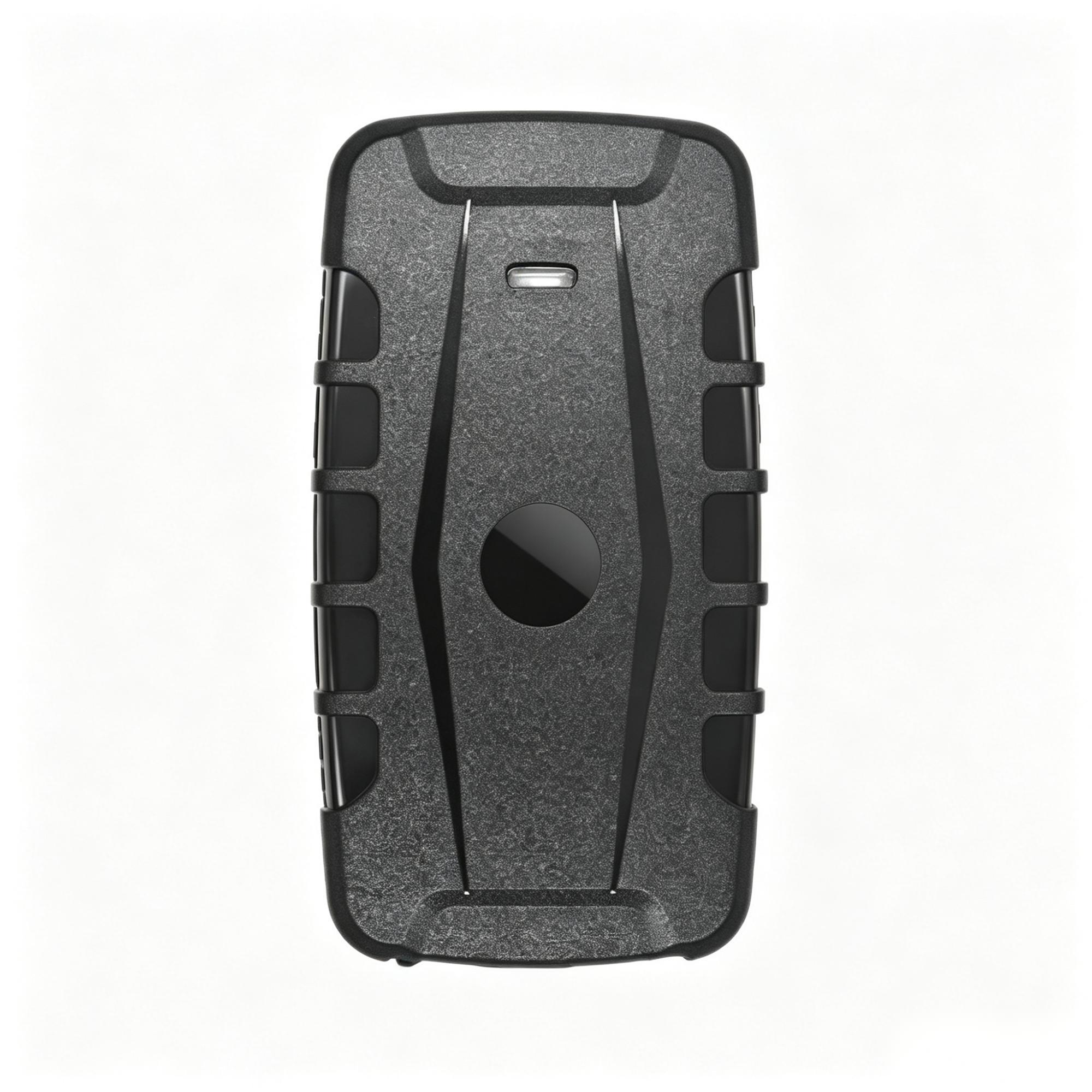
GT76
For trailers and other assets with no permanent supply, the comparison starts from a long-standby battery unit such as GT76.
Explore GT76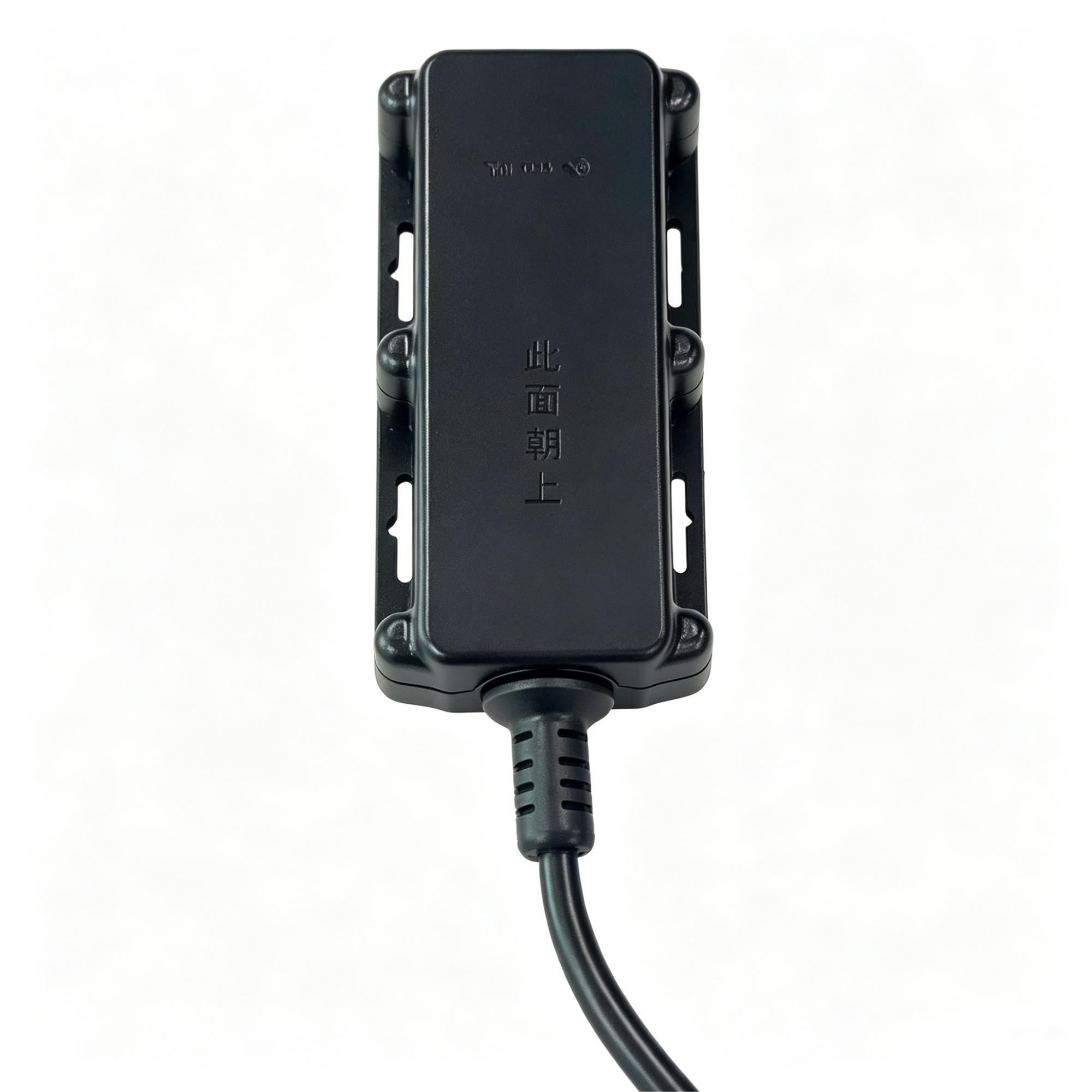
A700
Where a reefer or EBS supply is genuinely available and permanent, a wired outdoor unit like A700 can be considered. For GT76, confirm the wake trigger, time to a fresh position and time to upload after sleep separately; those behaviours still need exact-model evidence and a scoped sample check.
Explore A700What to confirm before ordering trailer trackers
| Check | What to establish | If you get it wrong |
|---|---|---|
| Power model | Whether the unit is battery-only, rechargeable, solar-assisted, or wired to an EBS/reefer supply where one exists. | The battery profile is unsuitable, or you wire to a supply that vanishes when the trailer is dropped. |
| Reporting profile | Interval at rest, under motion and on event — confirm what the exact model and firmware support. | Either battery life you did not expect, or gaps at the moment that mattered. |
| Network & roaming | Cellular generation and bands in every country the trailer enters, plus shutdown roadmaps. | A trailer that reports at home and goes silent abroad. |
| Enclosure | Ingress rating, temperature range, vibration and impact tolerance. | Ingress or temperature limits are exceeded during the intended season. |
| Mounting method | Magnetic, bolted or bonded, and whether it suits a shared pool or a fixed assignment. | Units migrate, disappear, or cannot be moved when the pool is reorganised. |
| Sensors | Whether door state, temperature or load status are needed, and whether the model supports them. | A second device on the same trailer, reporting into a second dashboard. |
For trailers and other assets with no permanent supply, the comparison usually starts from a long-standby battery unit such as the GT76. Where a reefer or EBS supply is genuinely available and permanent, a wired outdoor unit like the A700 can be considered instead — but only after confirming the supply is not lost on uncoupling.
What trailer tracking data is used for
- Locating trailers in a pool. The daily problem in any yard with more trailers than bays.
- Detention and demurrage evidence. Arrival and departure times at a customer site, recorded rather than recalled.
- Utilisation. Which trailers move and which have been parked for a month.
- Theft response. Unauthorised movement alerts and last known position — covered further in our brief on trailer and container cargo theft.
Tracker selection
The tracker selection check covers power model, reporting profile, enclosure and mounting.
Field sheet
The blank field confirmation sheet records what each trailer type needs.
Related asset path
If the assets are containers rather than trailers, see container tracking; for the wider category, see non-powered asset tracking.
Category context
Non-powered asset tracking: the constraint behind everything else
Trailers belong to a wider category the industry calls non-powered asset tracking — anything valuable that moves but has no reliable supply of its own. Skips and containers, generators and lighting towers, site cabins, pumps, agricultural implements, air-freight ULDs. Everything on this page applies to all of them, because they all share one constraint.
That constraint is simple to state and impossible to escape: every position report costs energy, and nobody is going to recharge the unit. Which produces a set of consequences worth having in front of you before comparing any two products:
- Battery life figures are meaningless without a reporting profile. A quoted runtime only has meaning beside its manufacturer-stated reporting profile. Ask what profile the number assumes, then ask what your profile would give.
- Event-driven beats interval-driven. A unit that sleeps until it detects movement may use less energy than a fixed short interval, but the wake behaviour and resulting record must be confirmed per model.
- Store-and-forward should be checked. Unpowered assets sit in yards, basements and steel-walled sheds. It may upload records the device successfully captured during a cellular-only gap; it cannot reconstruct positions GNSS never fixed.
- Concealment matters more than on a vehicle. Nobody is in the cab to notice a unit being removed.
- Fit-and-forget has to be true. If the install needs a technician to revisit, multiply that by your asset count before agreeing to it.
Where an asset does have intermittent power — a reefer trailer, an EBS supply, a generator's own battery — the calculation changes completely, and a battery-backed unit that charges when power is present is usually the right answer. That case is covered on semi-trailer trackers and, for temperature-controlled boxes, on cold chain tracking.
Frequently asked questions
Choosing the hardware
How does trailer GPS tracking work without power?
The tracker carries its own battery and manages energy by limiting how often it wakes, fixes position and transmits. Reporting may be sparse at rest and more frequent under motion; a movement-event wake and its timing must be confirmed for the exact model.
How long does a trailer tracker battery last?
It depends almost entirely on the reporting profile you choose, not on the model alone. Runtime depends on the exact model, configuration, reporting profile and duty cycle. Ask which manufacturer-stated profile a figure assumes and confirm it against the intended operation before purchase.
Can I wire the tracker into the trailer instead?
Sometimes. EBS/ABS circuits are live while coupled and refrigerated units have their own supply, but those disappear when the trailer is dropped — which is usually when you most need a position. Any wired approach should still work in the unpowered state.
Where should the unit be mounted on a trailer?
High on the front bulkhead, under a non-metallic panel, or with an external antenna — somewhere with a signal path, protected from road spray, not obvious to someone looking for it, and reachable by a fitter for battery service.
Magnetic or bolted mounting?
Magnetic suits a shared pool where units get reassigned; bolted or bonded survives longer and resists removal, but ties the unit to one trailer.
Can the same device track containers?
Often yes — the constraints are similar. Container work adds sea transit and stacking, which affect both signal and mounting. See container tracking.
Ordering and support
What about refrigerated trailers?
Reefers usually justify a wired unit with a temperature input, because the requirement is continuous rather than periodic and a supply is present. A battery unit is a fallback, not the primary choice.
What is the minimum order quantity?
Custom orders start from 100 units. Samples and small validation batches are handled separately, so testing on your trailers does not require a production commitment.
What warranty applies?
A 12-month limited warranty from the shipment date shown on the commercial invoice — a date both sides can verify from the same document.
Can the data go into our existing platform?
Where the model supports it, yes. We confirm that capability per model before you commit, so the platform choice stays open after the hardware is bought.