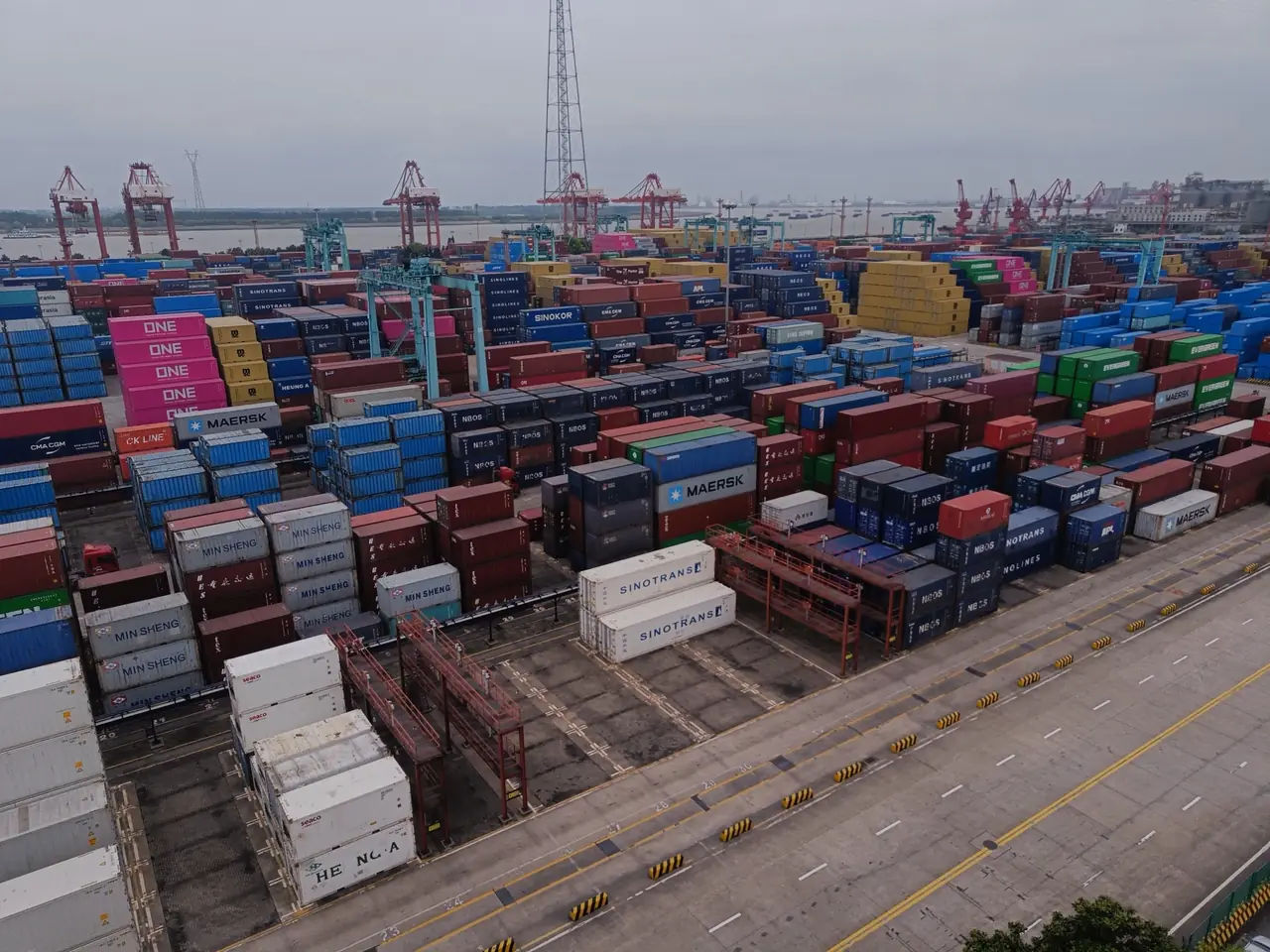
This is the cargo-theft angle. For the general trailer hardware guide — battery life against reporting frequency — see trailer GPS tracking.
Photo by Pierre Marshall, CC BY 4.0, via Wikimedia Commons
Cargo theft is the number the industry can no longer ignore
Cargo-security reports show that trailer and container losses remain a material operating risk, but a tracking device is only one part of the control. Carrier and handover verification, yard procedures, alert ownership and the response process still determine what happens after an exception is noticed.
For suitable assets, battery-powered tracking can add periodic position, dwell and movement events. The hard part is matching reporting, mounting, coverage and autonomy to the real route, then testing how the team responds to the information.
Why non-powered assets are the blind spot
A truck often has an ECU and a stable power path. A trailer or container may instead be separated, refrigerated, intermittently powered or unpowered between drops. Choose the tracking path around the actual power source, duty cycle, coverage and battery test; do not assume every trailer is dark or permanently online.
A shipment label and a reusable asset tracker serve different operating needs. For a trailer that moves between jobs, specify the reporting schedule, service access and replacement process across repeated journeys. Check when a new position becomes available after parking and whether the battery plan supports that schedule on the intended route.
The buyer checklist for trailer and container trackers
When you evaluate a battery GPS tracker for non-powered assets, hold every candidate against this list:
- Battery service interval at your real reporting rate. Compare the documented battery assumptions with the intended reporting, movement, coverage and temperature conditions. Validate a service interval for that profile instead of carrying over an advertised lifespan.
- Documented environmental protection. Check the ingress rating for the selected enclosure and installation. Salt exposure, vibration and wash-down need their own supporting evidence; an IP label alone does not establish those conditions.
- Mounting that suits the asset. Magnetic, strapped or fixed mounting must be checked against surface, vibration, concealment, signal and service access.
- A radio matched to the operating region. Check the carriers, bands, roaming conditions and retirement timetable for every target market before choosing Cat 1, LTE-M, NB-IoT or another path.
- Motion-based reporting logic. Sleep and movement profiles can preserve battery, but event timing and the platform response must be tested for the intended workflow.
- Tamper and light sensors. Removal or container-door signals can add context when placement, alert delivery and the response workflow are validated; they do not determine an insurance outcome.
- Open protocol or API. Positions must land in the fleet telematics platform you already run, not another silo.
CAT 1 or LTE-M? Get the radio right first
Compare LTE-M and 4G Cat 1 against the countries, operators, bands and roaming agreements for the intended lanes. Check the exact module and reporting profile, including registration, power use and recovery after coverage gaps. Operator availability and device behaviour must be verified for the chosen route before a radio is selected.
If a GPS tracker supplier cannot explain which network the module uses and why it fits your region, that is your cue to keep looking.
Sourcing trailer trackers from Shenzhen without the guesswork
Shenzhen offers many asset-tracking hardware options, but similar-looking specification sheets do not prove the same battery behaviour, enclosure performance, network registration or protocol output. Compare supplier evidence, prepare a controlled sample and check the required fields on the intended platform before a volume decision.
Start with a small pilot batch
If trailers, containers or chassis in your operation are difficult to account for between handovers, tell us the regions, reporting interval, mounting constraints and platform. We can compare documented options, coordinate samples and help define what the pilot must verify before any wider decision.
Frequently asked questions
How can tracking reduce cargo-theft risk for trailers and containers?
Tracking can add periodic position, dwell and movement events, but it is only one part of cargo control. Carrier and handover verification, yard procedures, alert ownership and the response process still determine what happens after an exception is noticed. The useful choice is therefore the one matched to the real route, reporting, mounting, coverage and autonomy, with the team's response tested rather than assumed.
What should I check when choosing a tracker for an unpowered trailer?
A detached trailer may lack reliable continuous power. Confirm its actual supply, required reporting schedule, battery service interval, mounting and regional network support. Validate optional movement, tamper or light inputs and the platform connection for the intended configuration.
Is LTE-M or Cat 1 better for trailers crossing regions?
Choose using the target countries, operator availability, bands and roaming agreements, then verify the exact module and reporting profile. Compare registration, power use and recovery after coverage gaps on the intended route; do not infer coverage or battery life from the radio label alone.
How should a trailer tracker be mounted and tested?
Mounting must be checked against the trailer's surface, vibration, concealment, signal and service access. For a controlled sample, define the regions, reporting interval, mounting constraints and platform, then test the required fields and how the team responds to position, dwell and movement information. A battery tracker also needs its real reporting rate, coverage and autonomy checked rather than inferred from a similar-looking specification sheet.
What should we verify before ordering trailer trackers in volume?
Before a volume decision, compare supplier evidence, prepare a controlled sample and check the required fields on the intended platform. Define the regions, reporting interval, mounting constraints and platform, then establish what the pilot must verify before any wider decision. Similar-looking sheets do not prove the same battery behaviour, enclosure performance, network registration or protocol output, so those points need evidence from the intended route and workflow.