Photo by Pierre Marshall, CC BY 4.0, via Wikimedia Commons
Cargo theft is the number the industry can no longer ignore
Estimated cargo theft losses in the United States climbed to roughly $725 million in 2025 — up about 60% year on year, with an average loss of around $274,000 per incident, according to figures reported by Verisk CargoNet. Behind almost every one of those incidents is the same weak spot: a trailer, container or chassis that nobody could see once it was dropped in a yard. That is why market analysts now list asset and cargo-loss tracking — not vehicle location — as the fastest-growing segment of the GPS tracking device market heading into 2026.
The fix is not complicated. A battery-powered GPS tracker on every trailer and container turns "we think it's in the yard" into a timestamped position and a geofence alert. The hard part is choosing hardware that survives years outdoors without wiring — and sourcing it without getting burned.
Why non-powered assets are the blind spot
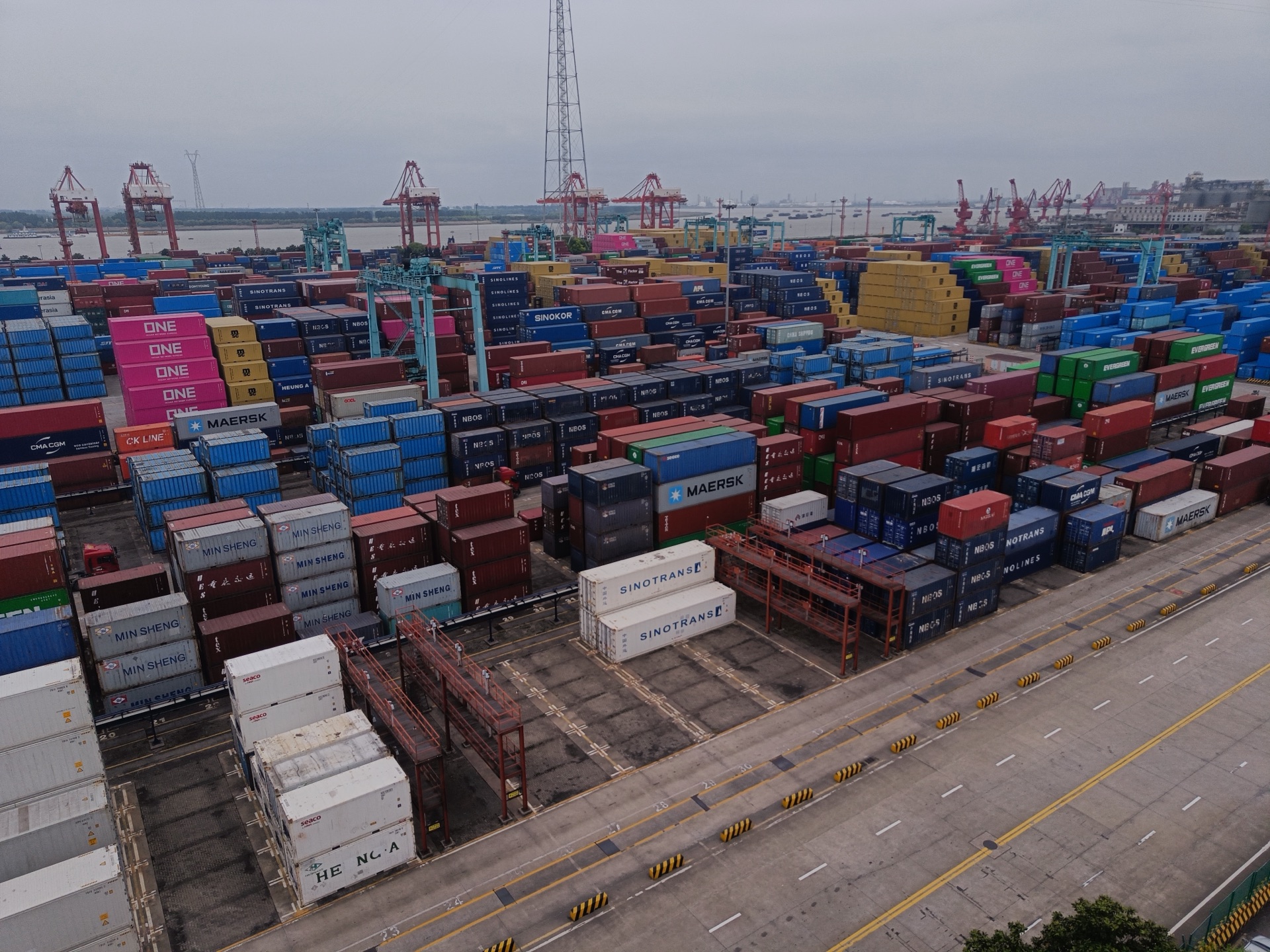
A truck has an ECU, constant power and a driver. A trailer has none of those. Between drops, it may sit unpowered for weeks in a yard, a port or a customer's lot. Traditional wired trackers simply have nothing to wire into, so most fleets historically left trailers dark — and thieves know it. Dropped trailers and unattended containers are consistently the preferred targets, precisely because there is no live position to raise the alarm.
Interestingly, the big platforms are attacking the adjacent problem: disposable, paper-thin shipment labels that give near-real-time visibility for a single trip. Useful for parcels — but a trailer is not a parcel. It is a revenue asset that stays in your fleet for ten to fifteen years. What it needs is a tracker that is reusable, long-life and permanently on the network, not a single-journey label.
The buyer checklist for trailer and container trackers
When you evaluate a battery GPS tracker for non-powered assets, hold every candidate against this list:
- Multi-year battery life at your real reporting rate. "5 years" at one ping per day is not the same as 5 years at hourly reports. Ask for the battery model at your interval.
- IP65–IP67 sealed housing. The unit lives on a chassis rail through rain, salt spray and pressure washing.
- Magnetic or bolt-on mount, no wiring. Installation should take minutes per asset and never modify the trailer.
- 4G Cat 1 / LTE-M — never 2G or 3G. Legacy networks are being retired across Europe, North America and Asia; a new tracker on a dying network is scrap on arrival.
- Motion-based reporting logic. Sleep when parked, wake and report when moved — this is what makes multi-year battery life real and turns unauthorized movement into an instant alert.
- Tamper and light sensors. Detection of removal or container-door opening is the difference between an alert and an insurance claim.
- Open protocol or API. Positions must land in the fleet telematics platform you already run, not another silo.
CAT 1 or LTE-M? Get the radio right first
Connectivity is the spec buyers skip and regret. LTE-M gives the lowest power draw and is excellent where carriers support it well; 4G Cat 1 rides the mainstream LTE network, which means broader coverage in mixed regions and fewer roaming surprises for assets that cross borders. There is no universal winner — the right answer depends on where your trailers actually roam. A competent supplier should be able to walk you through the trade-off for your lanes instead of quoting whatever module is on the shelf.
If a GPS tracker supplier cannot explain which network the module uses and why it fits your region, that is your cue to keep looking.
Sourcing trailer trackers from Shenzhen without the guesswork
Most of the world's asset-tracking hardware is built within an hour of Shenzhen, and the price spread between factories for a near-identical spec sheet is wide. The spec sheet, however, is not the product — battery autonomy claims, ingress protection and network registration all need to be validated on samples before a volume order. That is where a China-based sourcing partner earns its keep: comparing verified factories, testing samples against your checklist, handling OEM/ODM branding, and making sure the device speaks your fleet telematics platform's protocol before anything ships.
Start with a small pilot batch
If trailers, containers or chassis in your fleet still go dark between drops, tell us your regions, reporting interval and platform. We will shortlist verified battery-powered trackers from Shenzhen factories, arrange samples, and validate battery life and network performance before you commit to volume. Prove it on ten assets, then roll it out to the fleet.